
Matcha Victoria Sponge
Plus, a chat with Helen Goh about Baking & the Meaning of Life!

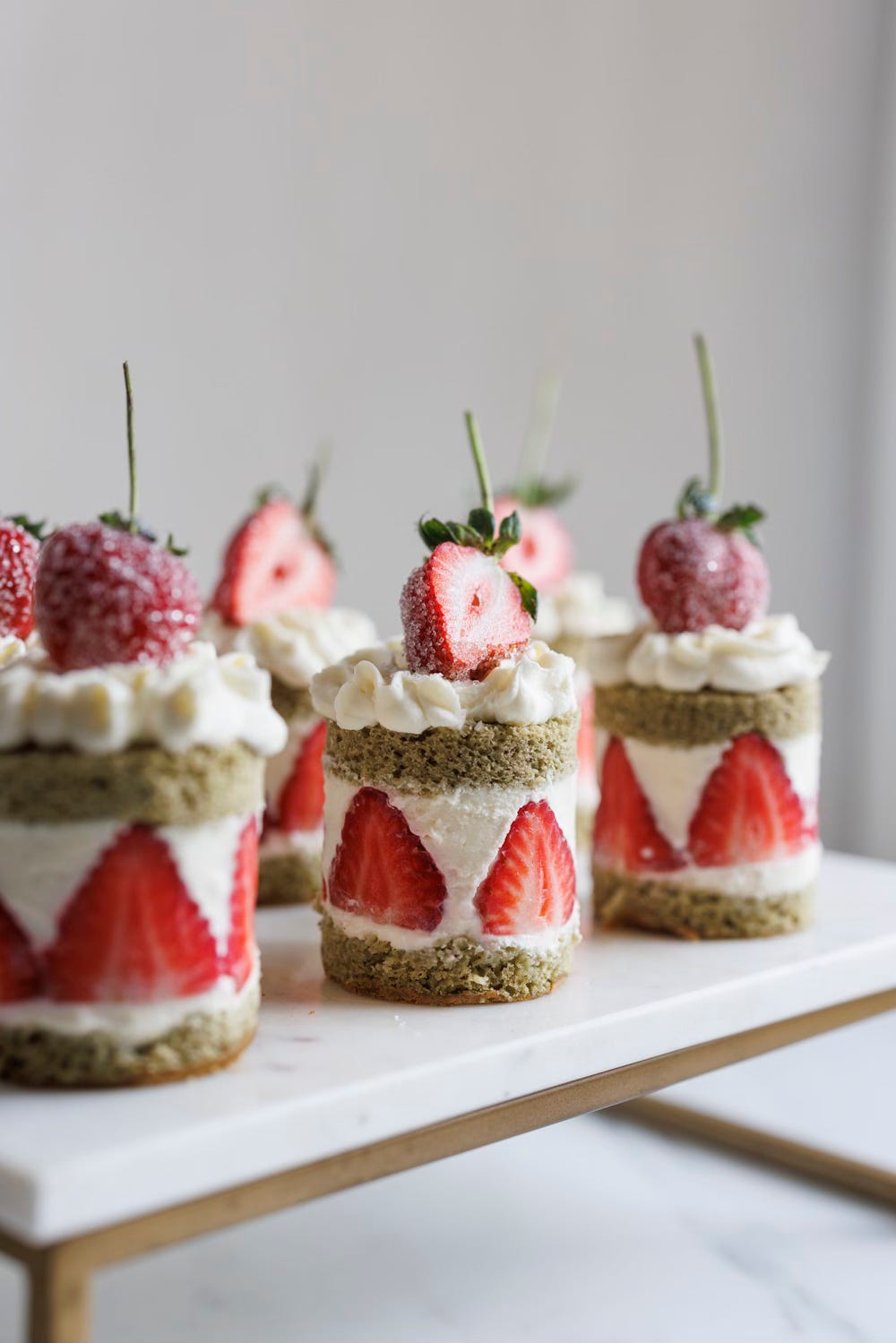
In January I met Helen at a coffee shop in London. I had just baked her Matcha Victoria Sponge cake (Wimbledon Cakes) from her latest book, Baking & the Meaning of Life* and I was over the moon to finally meet her IRL and get a chance to discuss Baking & The Meaning of Life! This book speaks to me on so many levels and I think you are going to be moved by her philosophy on life and baking. I recorded our conversation as a way to take notes, but I so enjoyed hearing Helen talk about her book in her own words, so I am sharing the recording with you as a podcast.
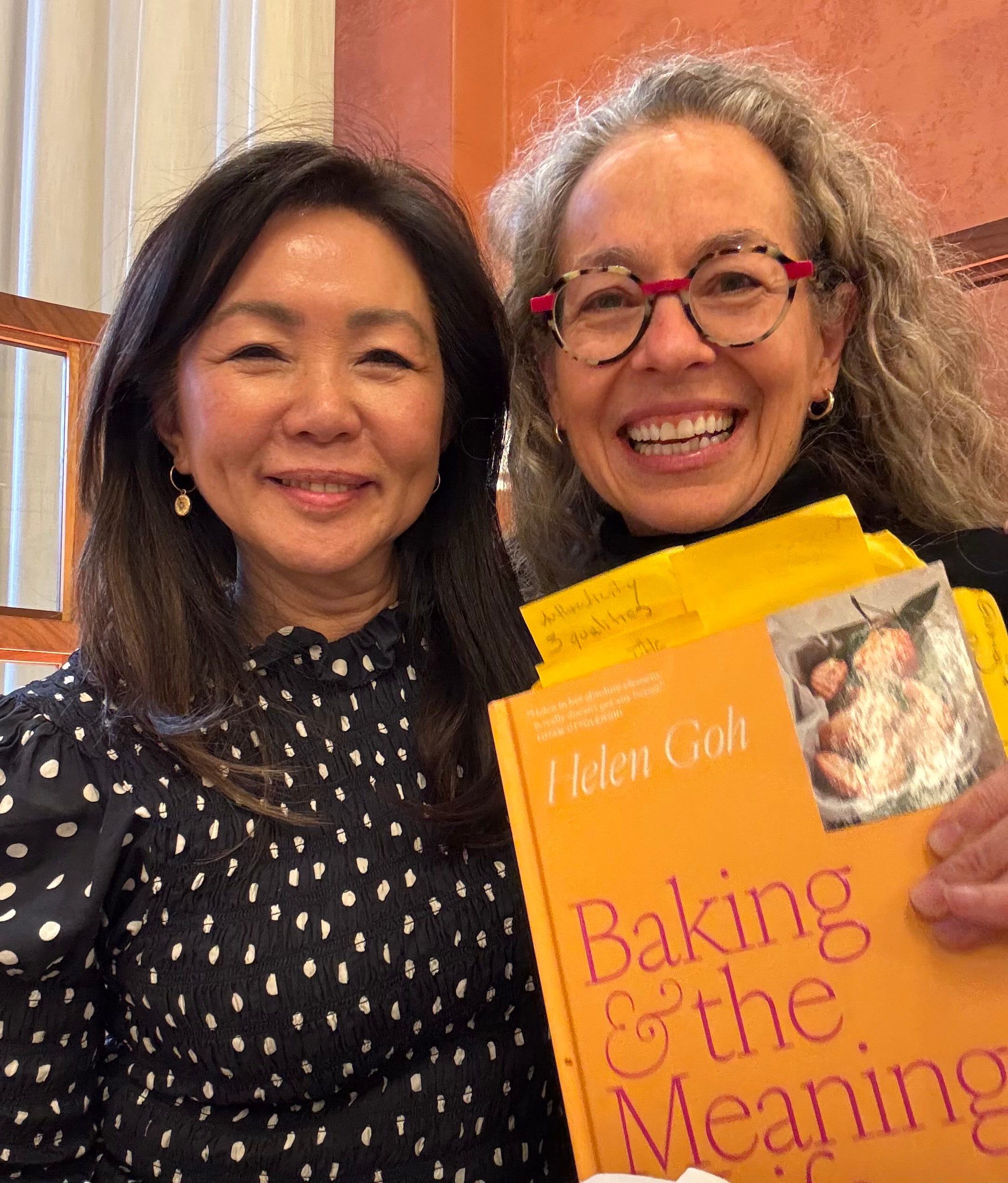
Helen’s beautiful work has always inspired me. Her book Sweet*, is one of my go to favorites. Her newest book showcases her incredible blend of flavors and use of flawless technique, but it goes even deeper. Not only will you learn how to bake, but she’s managed to put into words precisely why I love to bake. I felt such a connection to her words and loved creating this Matcha Victoria Sponge Cake and just know you will too. The recipe is available below to my paid “Extras” subscribers, and there’s a giveaway as well (open to everyone!).


The instant I saw this cake in Helen’s book I thought of it for Mother’s Day. It is beauty and whimsy, which suits the day for me. Helen bakes the cake as an 9-inch round (you’ll see a photo of her version below) in the book and I went with individuals, so you’ll see in the recipe card how to make either version.
Listen to My Conversation with Helen Goh
Here you can listen to my entire conversation with Helen, I hope you enjoy it as much as I did! Below you can read some of the Q&A highlights.
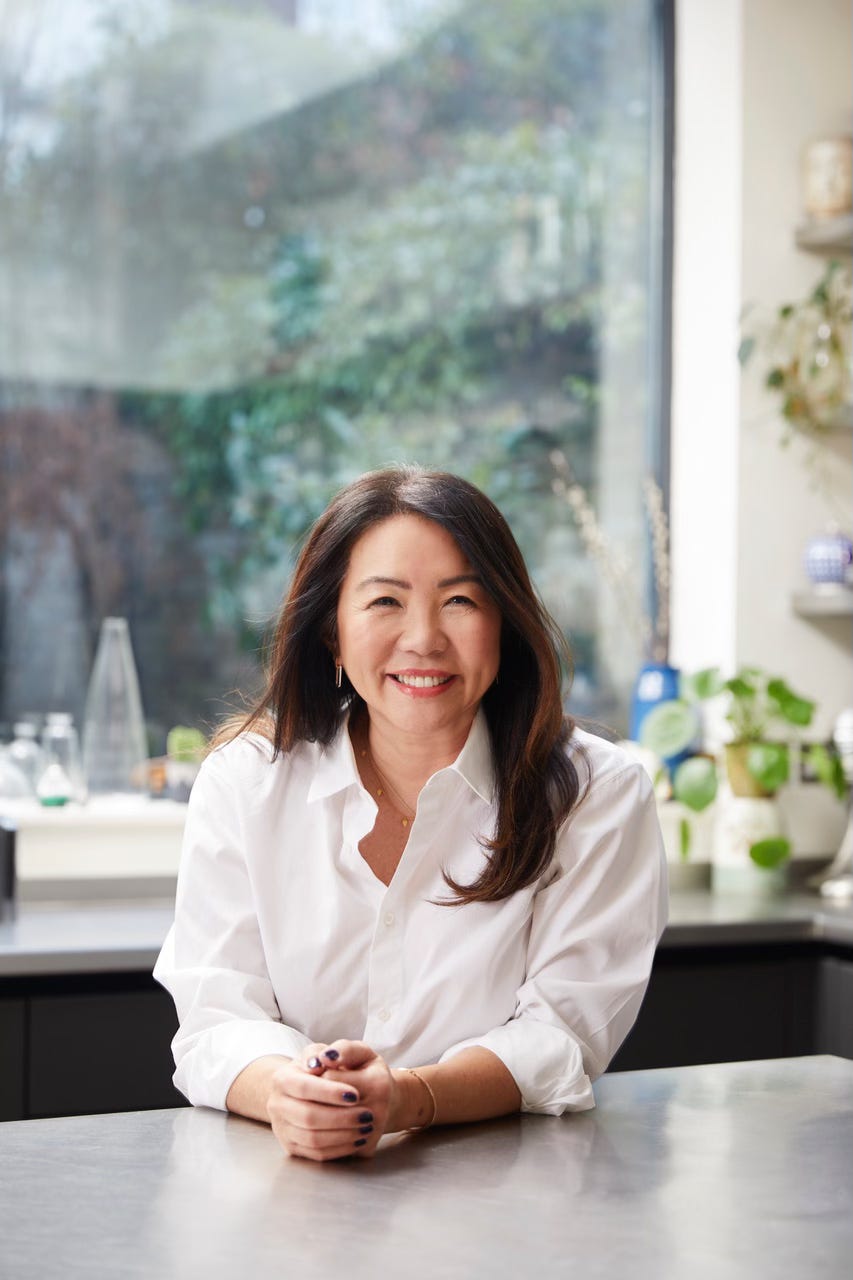
Q&A: Helen Goh, Baking Columnist, Cookbook Author, and Psychologist
Zoë: The name of your book, Baking & The Meaning of Life, spoke to me right away because I think anybody who bakes understands for themselves the importance of baking. How did you come to that title?
Helen: I knew the title way, way before I ever conceived of doing a real book. And that’s because the title comes from a novel called Mama and the Meaning of Life by Erwin Yalom, who’s a New York psychoanalyst. And it was one of the books I devoured when I was training as a psychologist.
There are all kinds of ways you can read the book, but it’s really a novel based on the experience of him talking with his patients. And what I took away from that was this idea that all the ordinary moments in life, when you stitch them together, make for an extraordinary life. When I thought about cooking and baking in particular, all the little bakes that I’ve done for friends, there’s a context around each of them, that if you stitch them together, that creates a meaningful life.
Whether it’s a simple cake that I take to a friend who’s recovering from an illness, or a cake I’ve made for somebody’s wedding, or whether it’s that I wanted an afternoon tea to connect with a friend, the context with all of that, that the baking facilitates and brings to that moment, is what makes an extraordinary life. So the title’s quite grandiose, but actually it’s the opposite of that. It’s actually saying that all the little tiny things that you do matter.
Zoë: You are uniquely qualified to be talking about the meaning of life and baking, and your background in psychology. So I was expecting you to talk more about the meaning that baking had for you, and you do that, but you also define what the meaning of life is.
Helen: There’s a chapter called Learning, Growth and Achievement. Because although I spent all the other six chapters talking about the sense of community, the sense of belonging, the sense of traditions, and giving and receiving and celebrating, which all involve other people, there are a subset of people who do baking just for their own sense of achievement, their own sense of mastery. That seventh chapter is about how there is a subset of people for whom just baking in and of itself is meaningful, because of that sense of mastery. I think that can be one of the things that gives life meaning.
Zoë: I love this notion that you talk about in the book that baking is effortful. Because right now, there is this wave of everything having to be easy and quick. I love baking because it’s effortful, but you also mention in the book that it’s almost like a meditation. And I get into that place, and that’s one of the joys of it for me, is that I get into this thing where the rest of the world sort of disappears for me, and you get centered.
I’d love for people to sort of recalculate the importance of being in a project and taking the time to do something that feeds your soul, feeds your mind. Tell me more about what that means to you.
Helen: There’s a psychology text called “Happiness” or “Finding Happiness” or something like that. They’ve subjected happiness to a kind of systematic research on what makes people happy. And one of the things is this idea of “flow.”
Flow is this state where you forget where you are, you forget time has passed, and you’re engrossed in a project. For me, whether it’s collecting garbage or whatever, if you’re in that thing and you’re doing it in a very present thing, to me that is flow. And I totally agree that that’s one of the things that contributes to happiness.
When I was doing my doctorate, every Sunday I would go to the warehouse at Ottolenghi, which was essentially a precursor to the “test kitchen” and Yotam kindly set it up so I could come on weekends and create and test recipes when I wasn’t going to University. One of the nicest compliments anyone has ever given me was from a person who was the manager of that hub. He said to me, “What I love about working with you is that when I glance over at you, you seem like no one else is here, nothing else is going on, you’re so absorbed in it.”
I thought, you know what, that is so true. To have something, whether it is gardening or art, to have that thing of flow when you’re there, just being so present, I think baking, because of the very fact that it does require a bit of effort and it does require concentration, that is the gift. That is not the problem. That is the gift.
I think baking in particular, so you’ve got that very personal element, the personal thing where you and your craft. But then when you go to share it, it becomes communal and social and kind of community-led. But there’s another aspect to it, which is the cultural. How many times do we mark, and you see now on Instagram, you know a moment is coming, whether it’s Valentine’s or Easter or Christmas or Eid or Chinese New Year. You know it’s coming because people start posting particular bakes that mark those moments. So I think baking, more than cooking, more than any other food, helps us to locate ourselves in time because it’s the time when certain things happen. But it also locates ourselves in community because suddenly, thousands of other people are making Christmas cakes, thousands of other people are making hot cross buns. Or pecan pie. So all of a sudden, it goes from being this personal project to a social project because you’re sharing it with people to this cultural thing because you’re marking Thanksgiving. So I just feel like baking is unique in that way, that it helps us to do that.
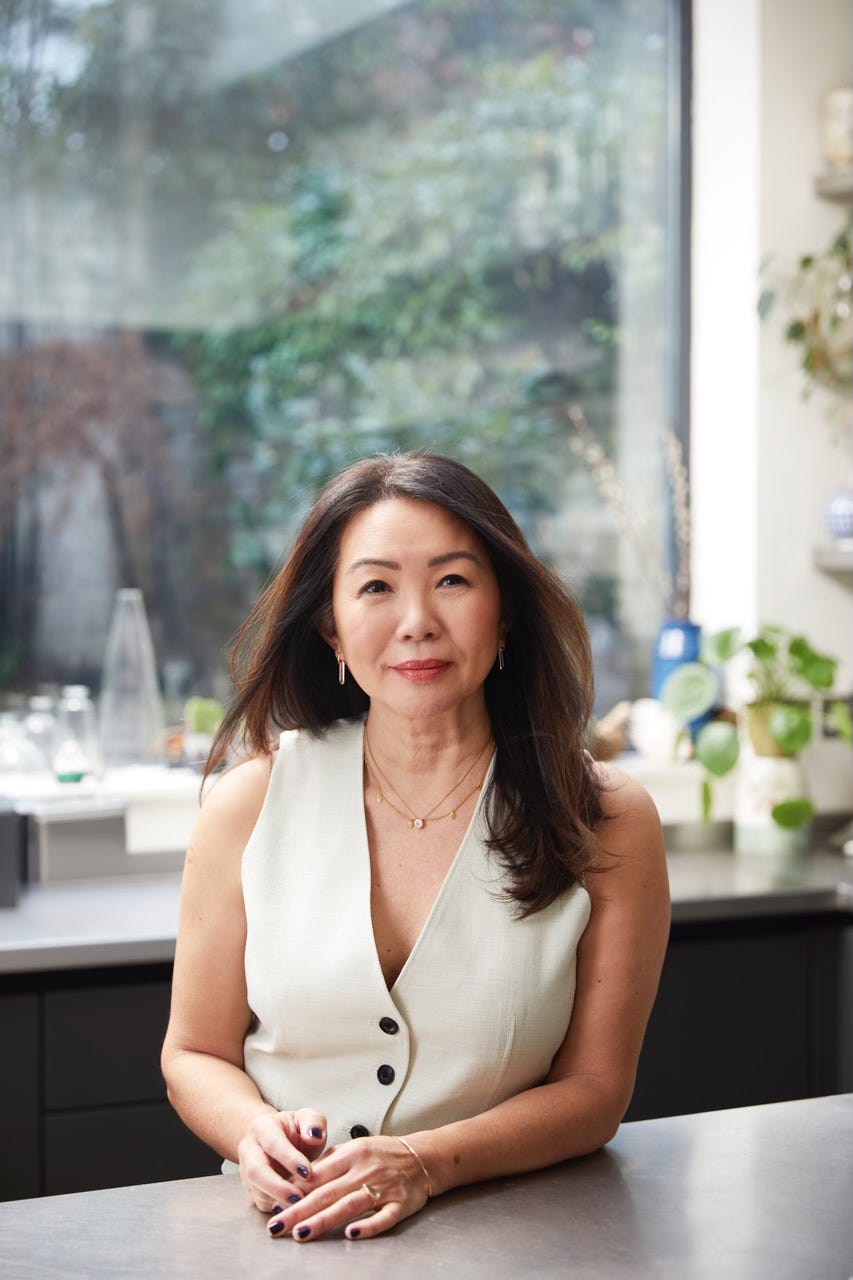
Zoë: You have a very interesting and layered experience in your own life in terms of the cities you’ve lived in, all of the different cultural influences of what makes up your baking repertoire, and many of the recipes touch on so many different parts of that. So first of all, tell us a little bit about the story of Malaysia, too.
Helen: I’ve not been self-conscious about drawing from my experience in the sense that, oh, Malaysia, what do I remember from that? Although the pandan chiffon cake is included because that was the very first kind of cake I ever ate.
But for example, I don’t think, “Oh, what can I create that’s Asian or that uses an Asian ingredient?” I think more broadly to begin with.
I often bake with fruit because I’m very happy to just eat baked fruit. But I wanted something different, so I decided to do an apricot galette. And then I was thinking about what flavors go with apricots to augment the flavor. It’s kind of floral and honey. And I thought, “OK, honey or elderflower?” And then I thought, “Hang on, I drink chrysanthemum tea every morning with those flowers. What if I crushed those flowers?” So what I did in this instance was an experiment, but it worked so well. I crush up the chrysanthemum flowers and they look like chamomile. And then I make a sugar with it. I divide it so half of it goes to macerate the apricots and half of it I use to make a Frangipane. Because then I get almond, I get honey, I get floral and that’s the base of my apricot galette.
I didn’t subconsciously think what was something Asian I could bring. But when I thought floral and honey, I instantly thought of chrysanthemum tea because that’s the tea I’ve drank all my life, from when I was six, having dim sum with my family.
So I don’t tend to look at what ingredients are Asian, but it infuses in my thinking. When I thought about doing crepes and what filling I would put in it, my children love Nutella, but I was craving red bean paste because for me, that’s like chocolate paste because it’s sweet and it’s creamy and my children wanted Nutella, but I wanted red bean. And then I thought, “Well, I’m going to do the red bean. This is my version.” So it’s kind of seeped into the recipes in that way.
There’s also an upside down pineapple cake, which I love, and I think they're underrated. But when I did the caramel, I thought, oh, I want something more. And salt was the most natural feeling. But then I thought, what if something a little sharper? And in Malaysia, we always dip fresh pineapples in salt and chili and tamarind. So I thought, what about if I added some tamarind into that caramel? And for me, it sort of came together.
Zoë: What’s a good place for beginning bakers to start in your book?
Helen: So I had this thing on tour where I say, “Tell me three things about yourself and I’ll tell you your first bake.” And then the whole group wanted to do their three things. So it became a little bit like a psychology baking thing.
Zoe: You can’t disconnect your two worlds anymore.
Helen: No, suddenly everywhere I went, it ended like this. Tell me three things about yourself. And I took to Instagram and did that as well.
So I want to say … I keep changing every day. Today I’m thinking the Chocolate Ginger Beer Cake. I think that’s a really good entry level because it’s very simple. It’s made in one saucepan. It’s a riff of Nigella Lawson’s chocolate Guinness cake. It delivers all that damp cocoa flavor with a hint of ginger, that pop of ginger. And then it’s creamy as well because it has this cream cheese icing. And the whole thing just goes together. And it’s super easy. I would say that’s the first one.
Giveaway!
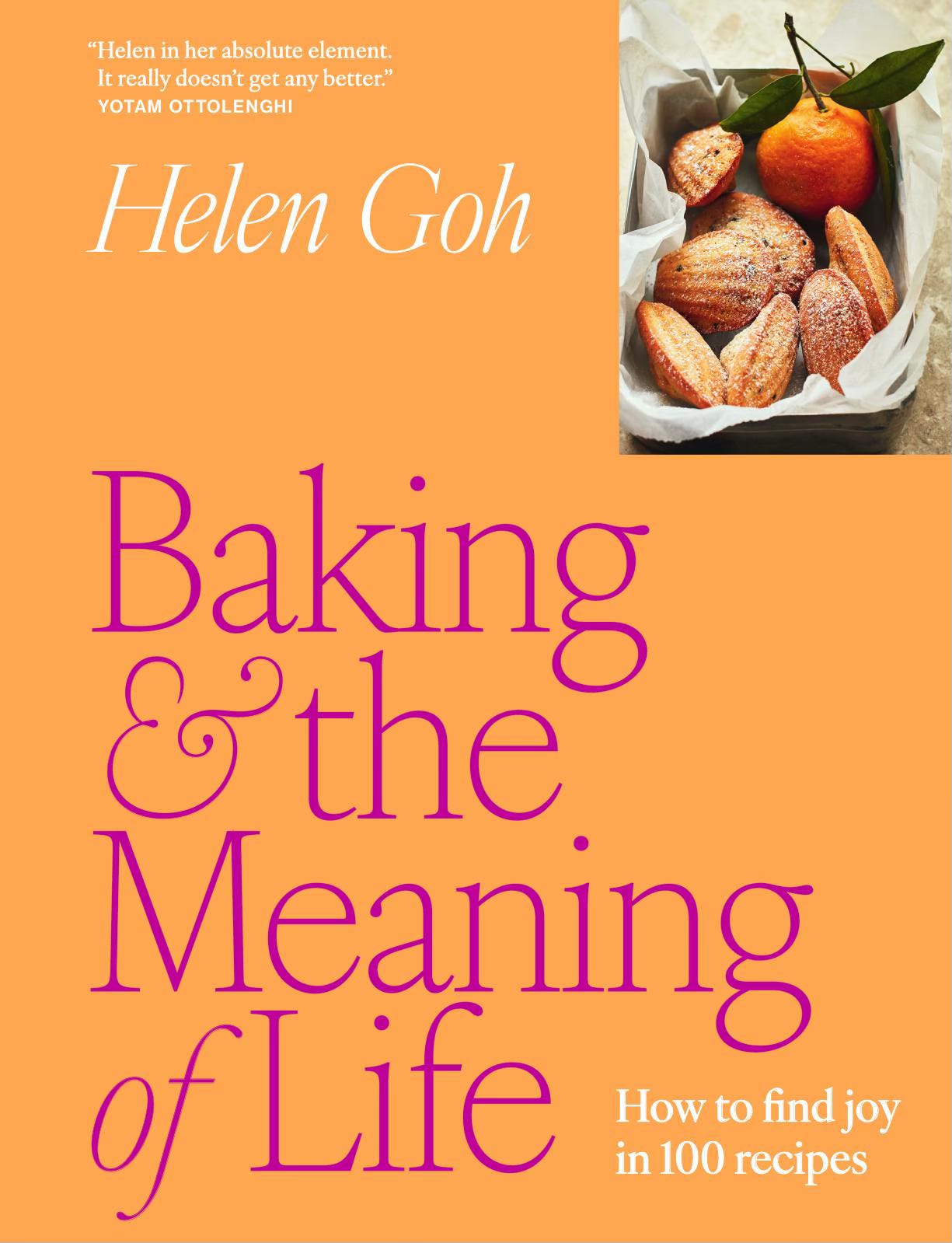
Helen has so kindly offered up two copies of her book for me to give away. Leave a comment below (paid subscribers only!) or like this post (click the heart at the top!) to be entered for a chance to win. Ends Tuesday, May 12, 2026 at 11:59 p.m. US addresses only.